Filter by:

Filter by published date

Viewing 331–360 of 397 results. Go to first page
Agosto Pinochet and Milton Friedman edited to appear as two sides of the same coin.

When Milton Friedman Met Pinochet

Chicago economists had free rein in Chile. The country is still recovering.
A First Republic Bank sign.
partner

First Republic and Our Undemocratic Bailout System

Regulators with no democratic accountability keep bailing out banks and big depositors — at the cost of billions to taxpayers.
Dilapidated traffic sign reading "School Bus Stop Ahead."
partner

Child Labor In America Is Back In A Big Way

The historical record says we shouldn’t be surprised.
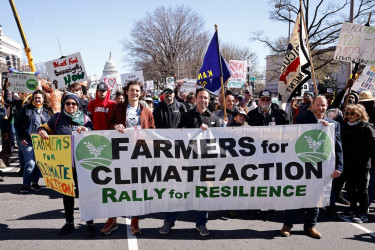
Climate activists march to the U.S. Capitol after the “Farmers for Climate Action: Rally for Resilience” on March 7 in D.C. (Paul Morigi/Getty Images)
partner

Farmers Are Mobilizing for Action. It’s Not the First Time.

In the 1970s, a family farm movement famously mobilized in “tractorcades” at the Capitol to try to prevent farm foreclosures and keep farmers on the land.

At the Altar of the Fed

Celebrating the Federal Reserve as a cockpit for economic steering conceals the reality of where power lies today.
A shattered painting of Adam Smith.

The Betrayal of Adam Smith

How conservatives made him their icon and distorted his ideas.
Alexander Hamilton stands guard over the U.S. Treasury building in Washington.

The Constitutional Case for Disarming the Debt Ceiling

The Framers would have never tolerated debt-limit brinkmanship. It’s time to put this terrible idea on trial.

How the Third Way Made Neoliberal Politics Seem Inevitable

An overhyped new paradigm proved to be a slogan without a movement.
Lieutenant Governor Garlin Gilchrist, left, holding up hands with Governor Gretchen Whitmer, right, both smiling.
partner

Michigan Democrats Can Reignite Their State’s Vaunted Labor Tradition

A historic victory in the midterm elections will let Democrats repeal the state’s right-to-work laws and return to its labor roots.
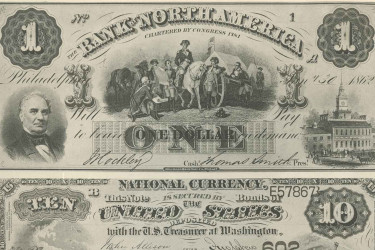
Paper money issued by the Bank of North America, circa 1862.

The Civil War's Economic Shadow

To finance the war, the Union had to turn to the banks, and with lasting consequences.
Turbulent drawing evoking mass strikes, urban decay, gas shortages, police in riot gear, chainsaw massacre, and disco.

We’re Haunted by the Economy of the 1970s

Politicians across the political spectrum warn of a return to the decade of stagflation, urban decay, and labor mutiny; but their solution misses the mark.
A still from "Ulitza Sezam" with the cast and puppet characters sitting around a table.

When the Muppets Moved to Moscow

A new book details the tangled tale of "Ulitsa Sezam," a "Sesame Street" spinoff that aired until visions of Russia's democratic future faltered.
Image of Jerome Powell speaking at a conference.

Vectors of Inflation

Inflation hawks and inflation doves alike have learned the wrong lessons from the monetary policies of Paul Volcker and Alan Greenspan.
A Coca-Cola billboard in Moscow in 1997.

Capitalism Triumphed in the Cold War, but Not by Making People Better Off

In the wake of economic crises, liberal democracies proved most adept at imposing austerity.
"Thinking like an Economist" light blue book cover

The ‘Economic Style’ as Red Scare Legacy

The rise of the “economic style of reasoning” in the 1960s cannot be properly understood without attending to the political fallout of earlier decades.
Facebook COO Sheryl Sandberg on stage giving a presentation below a screen showing pictures of people connected by the Facebook network.

How Capitalism—Not a Few Bad Actors—Destroyed the Internet

Twenty-five years of neoliberal political economy are to blame for today's regime of surveillance advertising, and only public policy can undo it.
Puerto Rican protests for statehood
partner

The U.S. Having Territories Perpetuates Inequality and Colonialism

Caribbean islands as U.S. territories within an American empire has since the start sparked fierce debates.
Kamala Harris, Joe Biden, and Barack Obama walking together

How to Tell the History of the Democrats

What connection does the party of Thomas Jefferson and Andrew Jackson have to the party of Barack Obama and Kamala Harris?
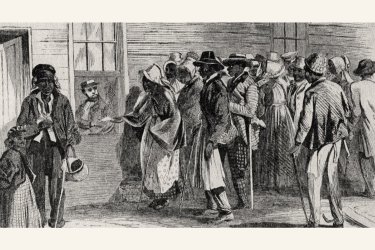
1861 engraving of Slaves for sale, a scene in New Orleans.

An Enduring Legacy: Financial Institutions, the Horrors of Slavery, and the Need for Atonement

Historian Daina Ramey Berry's April 2022 congressional testimony on the role of banks and insurers in US slavery.
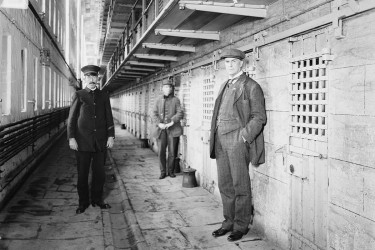
Photograph of prison warden T. M. Osborne and two other men in a penitentiary hallway.
partner

Were Early American Prisons Similar to Today's?

A correctional officer’s history of 19th century prisons and modern-day parallels. From Sing Sing to suicide watch, torture treads a fine line.
Black and white drawing of early 19th century naval vessels.

The Insurers’ Wars

When Thomas Jefferson’s administration was debating whether to declare war against Britain, it came up against America’s wealthy and influential marine underwriters.
Collage of photos of Andrew Mellon, Ethel Mars and E.W. Scripps.

The Great Inheritors: How Three Families Shielded Their Fortunes From Taxes for Generations

A century of tax avoidance later, the dynasties created in the 1900s are going strong.
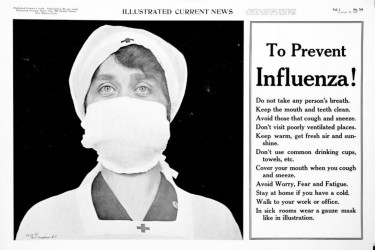
Advertisement during the 1918 Influenza Pandemic.

Political Accountability and the 1918 Influenza Pandemic

Why do some political incumbents adopt aggressive measures to slow the spread of infectious diseases while others do not?
Picture of Barack Obama and W.E.B Du Bois.

A Prophet and a President

Why black biography matters.
illustration of Joe Biden and upside-down Capitol building

Is a Democratic Wipeout Inevitable?

Even when the president’s party passes historic legislation, voters don’t seem to care.
A construction machine lifts giants stacks of paper money.

The U.S. Is Politically Bankrupt

For political reasons, powerful people don’t want the country to pay its bills. History shows all that could go wrong.
The word "bipartisanship" with the "bi" scribbled out.

The Case for Partisanship

Bipartisanship might not be dead. But it is on life support. And it’s long past time we pulled the plug.
View from the Empire State Building, August 1975.

A Crisis Without Keynes: The 1975 New York City Fiscal Crisis Revisited

An analysis of the factors that contributed to NYC's massive financial crisis in the 1970s, and the austere solutions that perpetuated it.
Job seekers wait to be called into the Heartland Workforce Solutions office in Omaha last summer.
partner

How Cruelty Became the Point of Our Labor and Welfare Policies

Why do so many politicians think people only work if threatened or forced into doing so?
President Franklin Roosevelt
partner

A Stronger Welfare State Is the Key to Saving Democracy From Extremism

Democrats’ policies aim to address societal problems to make fascism and socialism less attractive.

Filter Results:

Suggested Filters:

Idea

Person